Introduction – More Than a Meal, An Experience
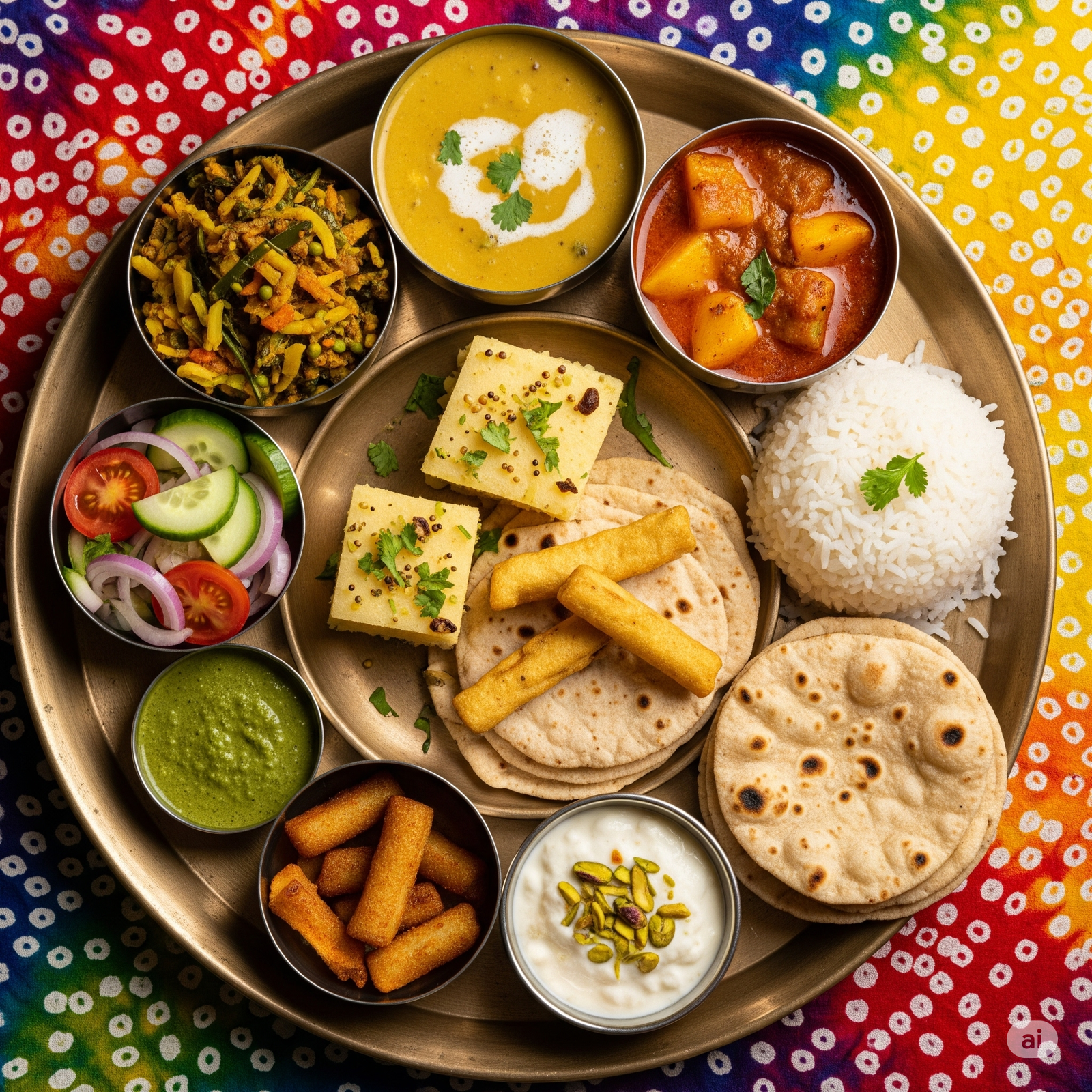
When a large, gleaming steel plate arrives at the table, it’s not just the arrival of food; it’s the beginning of an experience. A constellation of small bowls, or katoris, filled with a rainbow of colors, unfolds before your eyes. The air becomes fragrant with the sweet-and-sour aroma of dal, the earthy scent of cumin, and the fresh perfume of cilantro, creating an immediate sensory immersion. This is the Gujarati Thali, which is more than just a meal; it is a cultural expression, a testament to the rich culinary heritage of Gujarat. It is a complete, balanced meal served on a single platter, a concept deeply rooted in Indian tradition.
The grandeur of the thali is deeply connected to the Indian philosophy of Atithi Devo Bhava (“The guest is equivalent to God”). The sheer variety of food and the generosity of often unlimited servings in restaurants are a direct manifestation of the warmth and hospitality that lie at the heart of Gujarati culture. To serve a guest a complete, wholesome meal is an act of showing respect.
But this generosity is not just cultural; it is also rooted in ancient nutritional science. The structure of the thali is a perfect example of the Ayurvedic concept of Shadrasa, or the six essential tastes: sweet (madhura), sour (amla), salty (lavana), pungent (katu), bitter (tikta), and astringent (kashaya). The Gujarati thali is meticulously designed to incorporate all six of these tastes, ensuring a meal that is not only delicious but also holistically satisfying and balanced.
Thus, the Gujarati thali is not merely a collection of dishes but a physical manifestation of three key Indian philosophies. It is a confluence of the cultural ethos of hospitality (Atithi Devo Bhava), the scientific principles of holistic health (Ayurveda’s Shadrasa), and the spiritual/religious value of vegetarianism (Jain and Hindu influences). It is a meal that nourishes the body, honors the guest, and respects spiritual beliefs all at once. It is this multi-layered significance that elevates it from a simple meal to a profound cultural experience.
Anatomy of the Thali – Dissecting the Perfect Platter
This section will meticulously break down the thali into its core components, explaining the role and variety within each category. While a restaurant thali might feature over a dozen dishes , a daily home-cooked meal is simpler, often consisting of the core
dal-bhaat-rotli-shaak (lentils, rice, flatbread, vegetables).
The Foundation: Grains and Breads
- Bhaat (Rice): The centerpiece of the meal. Typically, it is plain steamed Basmati rice , sometimes made fragrant with ghee, cloves, and cinnamon for guests.
- Khichdi: A comforting porridge of rice and lentils (often moong dal). It can be plain or elaborate ( vaghareli khichdi – tempered) and is often served with kadhi.
- Rotli/Phulka: The most common bread. A thin, soft, unleavened whole wheat flatbread, often puffed directly on a flame and smeared with ghee.
- Bhakri: A thicker, crispier, and coarser flatbread, often made from whole wheat or millet flour, and typically served for dinner.
- Puri: A small, deep-fried, puffed bread made from whole wheat flour. It is often paired with sweet dishes like aamras or shrikhand.
- Thepla: A quintessential Gujarati spiced flatbread, often incorporating fresh fenugreek leaves (methi) or other vegetables. It is a travel-friendly staple.
The Heartbeat: Dal and Kadhi
- Gujarati Dal (Khatti-Mithi Dal): The soul of the thali. A thin, soup-like preparation of tuvar dal (split pigeon peas) famous for its unique sweet and sour (khatta-mitha) flavor. This balance is achieved using jaggery/sugar for sweetness and kokum, tamarind, or lemon for sourness. It often contains peanuts for texture.
- Gujarati Kadhi: A cooling, contrasting curry made from yogurt or buttermilk, thickened with gram flour and tempered with spices like cinnamon, cloves, and curry leaves. Like the dal, it also has a subtle sweet and sour taste.
- The Pairing Rule: An unwritten but traditional rule governs the meal’s structure: milk-based sweets (doodh pak, shrikhand, basundi) are served with kadhi, while grain or lentil-based sweets (lapsi, mohanthal, puran poli) are served with dal. This dictates the composition of the entire thali.
The Canvas: Shaak (Vegetable Preparations)
A thali will feature at least two or three shaak, showcasing seasonal vegetables.
- Sukku Shaak (Dry Vegetables): Stir-fried preparations with minimal gravy. Examples include Bhinda nu Shaak (okra) , Bateta nu Shaak (potato) , and Gawar Phali Aloo ki Sabji (cluster beans and potato).
- Rasawalu Shaak (Gravy Vegetables): Vegetables in a tomato-based or other curries. Examples include Sev Tameta nu Shaak (a spicy, sweet tomato curry topped with crispy sev noodles) and Rasawala Bateta nu Shaak (potato curry).
- Bharelu Shaak (Stuffed Vegetables): Vegetables like small eggplants (bharela ringan) or okra (bharela bhinda) are stuffed with a spiced mixture of coconut, peanuts, and gram flour.
The Richness: Farsan (Savory Snacks)
The distinction between farsan (freshly made savory items served with the meal) and nasta (dry, storable snacks) will be clarified here. A thali always includes
farsan.
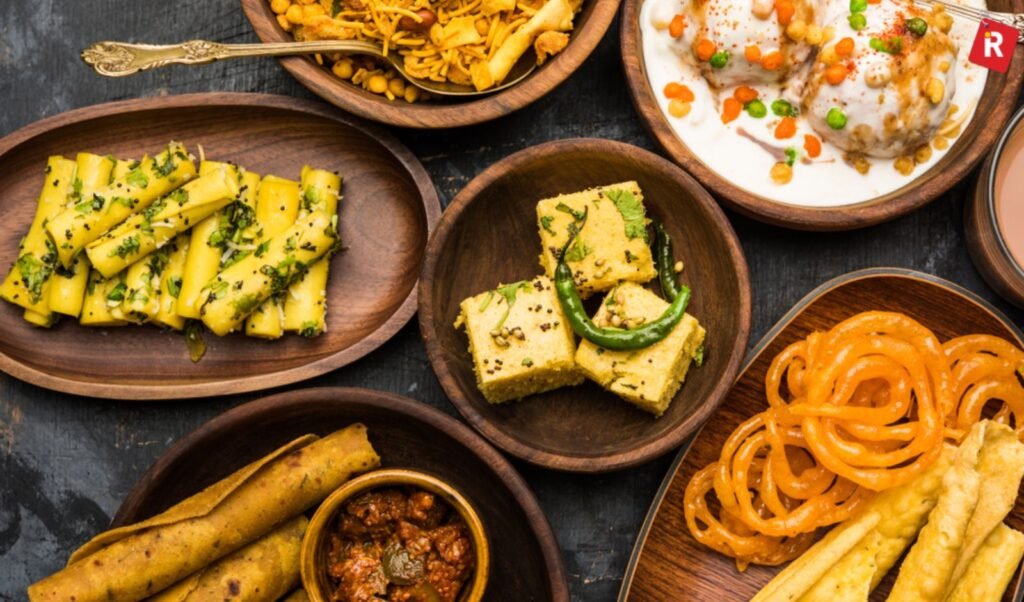
- Steamed Farsan: Light, healthy, and iconic. Examples are Dhokla (a fluffy, steamed cake of fermented rice and chickpea flour) , Khandvi (delicate, tightly rolled sheets of gram flour and yogurt) , and Patra (colocasia leaves smeared with spiced gram flour, rolled, and steamed).
- Fried Farsan: Crispy, indulgent treats. Examples include Methi na Gota (fenugreek fritters) , Vatana ni Kachori (pigeon pea-stuffed pastries) , and Samosa.
The Sweet Finale (Served with the Meal): Mithai
A crucial element, the mithai (sweet dish) is eaten alongside the savory dishes, not as a separate dessert course.
- Shrikhand: A thick, creamy dessert of strained yogurt, sweetened and flavored with saffron and cardamom. Often served with puris.
- Mohanthal: A dense, fudge-like sweet (barfi) made from roasted gram flour, ghee, and sugar.
- Basundi/Doodh Pak: Sweet, thickened milk desserts, rich with nuts and spices.
- Lapsi/Sukhdi: Wheat-based sweets. Lapsi is a broken wheat pudding, while Sukhdi (or Golpapdi) is a simple, soft sweet of wheat flour, ghee, and jaggery.
The Accompaniments: Flavor and Texture Enhancers
- Athanu (Pickle): Various pickles add a pungent, sour, or sweet-spicy kick. The most famous is Chhundo, a sweet and spicy shredded raw mango pickle.
- Chutney: Green chutney (coriander-mint) and sweet chutney (tamarind-date) are common.
- Salad/Sambharo: A simple salad of chopped tomatoes, cucumbers, and onions (kachumber) or a warm, stir-fried cabbage slaw (sambharo) provides freshness and crunch.
- Papad: Roasted or fried lentil wafers that add a crispy texture.
The Digestif: Chaas
The meal traditionally concludes with a glass of chaas (spiced buttermilk), which is cooling and aids digestion.
Table 1: Anatomy of a Grand Gujarati Thali
This table is invaluable for the reader trying to grasp the complexity of the thali. It organizes a large amount of information into a clear, digestible format, serving as a quick reference guide that visually reinforces the meal’s structure.
| Category | Role in Thali | Classic Examples (with key ingredients) |
| Farsan | Savory Snack | Dhokla (Steamed Rice/Gram Flour), Khandvi (Gram Flour/Yogurt Rolls), Methi na Gota (Fried Fenugreek Fritters) |
| Shaak | Main Vegetable Dishes | Undhiyu (Mixed Winter Vegetables), Sev Tameta nu Shaak (Tomato Curry with Sev), Bhinda nu Shaak (Dry Okra) |
| Dal / Kadhi | Lentil / Yogurt Curry | Khatti Mithi Dal (Pigeon Peas, Jaggery, Kokum), Gujarati Kadhi (Yogurt, Gram Flour, Spices) |
| Bhaat / Khichdi | Main Grain | Steamed Basmati Rice, Moong Dal Khichdi (Rice, Mung Beans) |
| Rotli / Puri | Bread | Phulka Rotli (Thin Wheat Bread), Puri (Fried Wheat Bread), Thepla (Spiced Fenugreek Bread) |
| Mithai | Sweet Dish | Shrikhand (Strained Yogurt, Saffron), Mohanthal (Gram Flour Fudge), Aamras (Mango Pulp) |
| Accompaniments | Flavor/Texture Enhancers | Chhundo (Mango Pickle), Sambharo (Cabbage Slaw), Papad (Lentil Wafer) |
| Beverage | Drink / Digestif | Chaas (Spiced Buttermilk) |
The Soul of Flavor – Understanding the Gujarati Palate
This section will delve into the iconic sweet-and-sour flavor profile that defines Gujarati cuisine. This is not an accident, but a deliberate culinary choice to create complexity and balance. This balance is a direct application of the Ayurvedic principles of
Shadrasa, essential for a complete meal. All six tastes are present in a single thali:
- Sweet: Jaggery in the dal, the mithai, sweet potatoes in undhiyu.
- Sour: Kokum/lemon in the dal, yogurt in kadhi and raita, pickles.
- Salty: Salt in all dishes, papad.
- Pungent: Ginger, garlic (in some regional variations), green chilies, mustard seeds.
- Bitter: Fenugreek in thepla or muthiya, bitter gourd shaak.
- Astringent: Turmeric, asafoetida, some lentils, potatoes.
There is a practical and adaptive logic behind this flavor profile. It is not just about taste, but a complex culinary adaptation to the region’s geography, climate, and historical trade. The use of jaggery is a practical, environmental driver to prevent dehydration in the hot climate and to balance the taste of saline water in some areas like Central Gujarat. Furthermore, the balance of flavors reflects a health-conscious, traditional approach. The arrival of ingredients like tomatoes and potatoes, brought by Portuguese traders, provided new canvases for this existing flavor philosophy. Thus, this flavor profile is a multi-layered construct: it is a survival mechanism, a health principle, and a dynamic identity that has absorbed and “Gujju-fied” foreign ingredients over centuries.
Key Flavoring Agents
- Sweetness: Jaggery is preferred over refined sugar for its earthy taste and health benefits.
- Sourness: A variety of souring agents are used, including kokum (dried mangosteen), tamarind, and lemon/lime juice, each lending a slightly different character to the dish.
- Signature Spice Blend – Dhana-Jeeru: This unique Gujarati blend of ground coriander and cumin powder is the backbone of many shaak and masalas.
A Culinary Map of Gujarat – Regional Thali Variations
The idea that there is no single “Gujarati Thali” will be explored in this section. Instead, it is a concept with distinct regional personalities shaped by geography, history, and local culture.
The Fiery Thali of Kathiawad (Saurashtra)
- Flavor: Known for being intensely spicy and pungent, with a liberal use of garlic, onions, and green chilies. It largely lacks the sweetness found in other regions.
- Staples: The primary bread is Bajra no Rotlo (millet flatbread) instead of wheat rotli. Chaas is an integral part of every meal.
- Signature Dishes: Ringan no Olo (spicy smoked eggplant mash), Lasaniya Bateta (garlicky potatoes), and a spicy kadhi.
The Green Bounty of Surat (South Gujarat)
- Flavor: Celebrates the region’s fertile soil and abundance of fresh, green vegetables. The taste is often green, garlicky, and incorporates fresh coconut.
- Staples: A variety of green vegetables like papdi (hyacinth beans), peas, and green beans take center stage.
- Signature Dish: The famous Undhiyu, a complex winter vegetable curry that is Surat’s gift to the world.
The Resilient Cuisine of Kutch
- Flavor: Shaped by the arid, desert landscape, the food is simple, practical, and uses a balanced mix of salty, spicy, sweet, and sour flavors without the pronounced sweetness of Central Gujarat. There is an emphasis on preservation (drying, pickling) due to the scarcity of fresh produce.
- Staples: Bajra is the main grain, used for rotla and khichdi. Garlic plays a central role.
- Signature Dishes: Kutchi Dabeli (a sweet and spicy potato mixture in a bun), Olo (a version of eggplant mash), and unique sweets like Gulab Pak. Bhatia Kadhi is a unique local variety.
The Grand Synthesis of Ahmedabad (Central Gujarat)
- Flavor: This region’s thali is a melting pot, bringing together influences from across the state. It is often the most elaborate and features a more pronounced use of sugar or jaggery, partly to combat the region’s saline water.
- Staples: This is where you will find the most comprehensive thalis, often with over a dozen items, representing the “best of” Gujarat.
The Purity of the Jain Thali
A variation found across all regions, the Jain thali adheres to strict religious principles. It excludes onions, garlic, and root vegetables like potatoes and yams. It often features more dishes made from lentils, pulses, and non-root vegetables like raw bananas.
Table 2: A Tale of Four Thalis – Regional Variations at a Glance
This table directly confronts the stereotype of a monolithic “Gujarati cuisine,” illustrating the dramatic differences between regional cuisines in a clear and concise manner.
| Characteristic | Kathiawad (Saurashtra) | Surat (South Gujarat) | Kutch | Central Gujarat (Ahmedabad) |
| Dominant Flavor | Spicy, Pungent, Less Sweet | Fresh, Green, Garlicky | Balanced, Simple, Earthy | Sweet, Elaborate, Synthesized |
| Main Bread | Bajra no Rotlo | Rotli, Puri | Bajra no Rotlo | Rotli, Puri |
| Signature Dish | Ringan no Olo, Lasaniya Bateta | Undhiyu | Kutchi Dabeli, Olo | Most elaborate thalis |
| Key Ingredients | Garlic, Onion, Green Chilies | Fresh Green Vegetables, Papdi | Millet (Bajra), Garlic | Jaggery/Sugar, Mix of all |
Feasting with the Seasons – The Gujarati Culinary Calendar
This section will highlight the cuisine’s deep connection to the seasons, where the thali transforms to celebrate nature’s bounty. The Gujarati thali is not a static menu; it is a dynamic, living culinary calendar. The dramatic shift in key dishes from winter (Undhiyu) to summer (Aamras) showcases this deeply rooted, pre-modern “farm-to-table” philosophy. To eat a thali is not just to dine, but to participate in a seasonal ritual.
The Warm Embrace of Winter
- Undhiyu – The King of Winter: A deep dive into this iconic dish, whose name means “upside down” (undhu), referring to the traditional method of cooking it in an earthen pot (matlu) buried underground and cooked from above. It is a complex medley of winter vegetables like surti papdi, purple yam (ratalu), sweet potatoes, small eggplants, and raw bananas, all bound by a fresh green masala and studded with fried fenugreek dumplings (methi na muthiya).
- Ponk – The Tender Green Gem: A true winter delicacy, especially in Surat. These are tender, young green sorghum grains, which are roasted and served simply with spiced sev (gram flour noodles) and a squeeze of lemon.
- Adadiya Pak – The Winter Elixir: A nutritious and warming sweet from Kutch, made from urad dal flour, ghee, jaggery, and a host of spices and dry fruits. It is believed to have healing properties and provide warmth during the cold months.
- Umbadiyu – The Rustic Cousin: A smoky, earthier version of Undhiyu from South Gujarat, cooked by farm laborers in a sealed pot that is buried in the ground with hay and cow-dung cakes, giving it an intense, rustic flavor.
The Golden Joy of Summer
- Aamras – The Nectar of Mangoes: As summer arrives, the celebration of mango season dominates the thali. Aamras, a simple, sweet pulp of ripe mangoes (especially Kesar or Alphonso), becomes the primary sweet dish. The classic, divine pairing is aamras with hot, fluffy puris. The Gujarati version of aamras uniquely includes a pinch of dried ginger powder (sonth) and a spoonful of ghee to aid digestion.
- Fajeto – The Mango Kadhi: An ingenious dish where leftover aamras is used to create a unique, sweet and sour kadhi, showcasing the Gujarati ethos of not wasting food.
The Art of the Thali – A Guide to Serving and Savoring
This section will provide a practical guide for the reader, transforming them from a passive observer to an active participant in the thali experience. The Gujarati thali redefines the relationship between the diner and the dish. Unlike a plated, coursed Western meal where the chef dictates the experience, the thali empowers the diner to become a co-creator of their own flavor journey. It is an interactive and personalized form of culinary art.
The Host’s Role – Setting the Stage
- The Arrangement: While many modern restaurants have their own style, traditional serving has a logic. Salt is often placed on the thali first. Dry items, pickles, and chutneys are placed on the periphery. Gravies and dals are in katoris. Bread and rice are in the center. The sweet dish is also served from the beginning, typically on the right side.
- The Serving Process: In a traditional setting, the meal is served all at once, not in courses. Servers move among the guests, refilling bowls from buckets or containers, symbolizing the spirit of generous hospitality.
The Diner’s Role – Conducting the Symphony
The diner is the “conductor” of their meal. The thali is not a rigid sequence but an interactive palette. The diner decides what to mix, what to have more or less of, and how to combine flavors and textures in each bite.
- A Step-by-Step Approach to Eating:
- Start with Farsan: Often, the meal begins by tasting the savory snacks, perhaps with a bit of chutney.
- The Bread Course: Tear off a small piece of rotli or puri. Use it to scoop up a bit of a dry shaak. For the next bite, dip it into the dal or kadhi. For a third, try it with a different shaak and a dab of pickle (athanu). This act of mixing and matching creates a unique experience with every bite. The sweet dish can be eaten at any point to cut the spice.
- The Rice Course: After the breads are finished, rice (or khichdi) is served. This is traditionally eaten with the remaining dal or kadhi. One can mix in any leftover vegetables and pickles to create a final, flavorful combination.
- The Final Touch: Use a piece of crispy papad to scoop up the rice mixture, adding another layer of texture.
- The Cleansing Finish: End the meal with a glass of cool, digestive chaas and a mouth freshener ( mukhwas).
Conclusion – The Enduring Legacy of the Gujarati Thali
In summary, the thali is a complete experience that engages sight (the colors), smell (the aromas), touch (the textures of bread and rice), and, of course, taste (the six flavors). Its journey from a meal rooted in Gujarat’s history and geography to a global culinary ambassador found in restaurants worldwide is a testament to the efforts of the Gujarati diaspora to preserve their culture through food.
Ultimately, the Gujarati thali is more than the sum of its parts; it is a circle of warmth, generosity, and community served on a plate. It is an invitation to share, to savor, and to experience the profound truth that in Gujarat, to feed someone is an act of love. Personal anecdotes reinforce this human connection, like when people recall how their mother or mother-in-law taught them which bread to pair with which vegetable and dal , or how a home-cooked meal feels so comforting and memorable compared to the overwhelming experience of a restaurant. It is a meal that nourishes not just the body, but also the soul, making it a truly unforgettable culinary experience.